Backflow Testing
A certified tester checks whether the assembly prevents reverse flow. Testing identifies failures that can create compliance concerns or put the water supply at risk.
Explore testingMarana • Oro Valley • Catalina • Northwest Tucson
Understand local testing rules, repair and replacement considerations, and the credentials to verify before work begins.
Topics
These informational pages explain what the work typically involves, when it may be needed, and which questions to ask a qualified provider.
A certified tester checks whether the assembly prevents reverse flow. Testing identifies failures that can create compliance concerns or put the water supply at risk.
Explore testingRepair addresses worn checks, relief valves, seals, springs, debris, leaks, and other faults that cause an assembly to fail testing or stop working correctly.
Explore repairReplacement may solve problems involving an obsolete, badly damaged, frozen, undersized, or uneconomical assembly by installing an approved device for the connection.
Explore replacementIrrigation backflow work protects the connection between landscape systems and potable water, helping prevent fertilizers, soil, and stagnant water from flowing backward.
Irrigation guidanceCommercial backflow work can involve testing, documentation, repairs, replacements, fire lines, irrigation systems, and multiple assemblies to resolve compliance problems.
Commercial guidanceWhy it matters
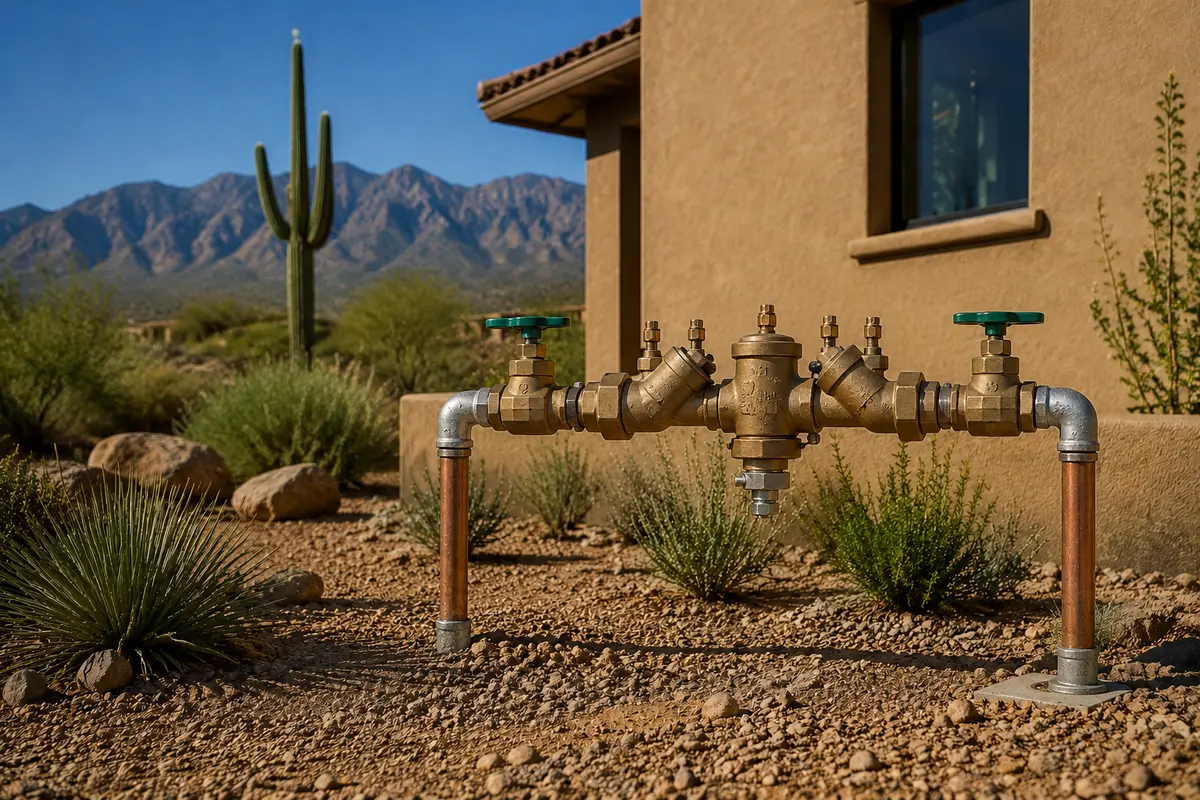
A backflow prevention assembly is designed to help keep water from reversing direction and entering the potable water system.
A practical process
Utility boundaries and program requirements can differ by property.
Check tester certification, local registration, and contractor licensing when applicable.
Testing, repair, replacement, installation, and retesting may have separate requirements.
Locations
Each location page summarizes city- and utility-specific requirements. Because mailing addresses and water-provider boundaries do not always match, confirm the serving utility for the property.
Frequently asked questions
Testing checks whether the installed assembly is operating as intended. Frequency and reporting requirements depend on the property, assembly, and water provider.
The written result should identify the issue. Repair or replacement may be followed by retesting and submission of an updated report.
Confirm current certification and any utility-specific registration or approved-list requirement directly with the serving water provider.
Not currently. This informational website does not have a current service operator or active request form.
Check certification, utility registration, reporting, permit, and retesting requirements for your property.